Collaborative settlement reflects historic Tribal partnerships, environmental investments, and shared commitment to Skagit River watershed stewardship
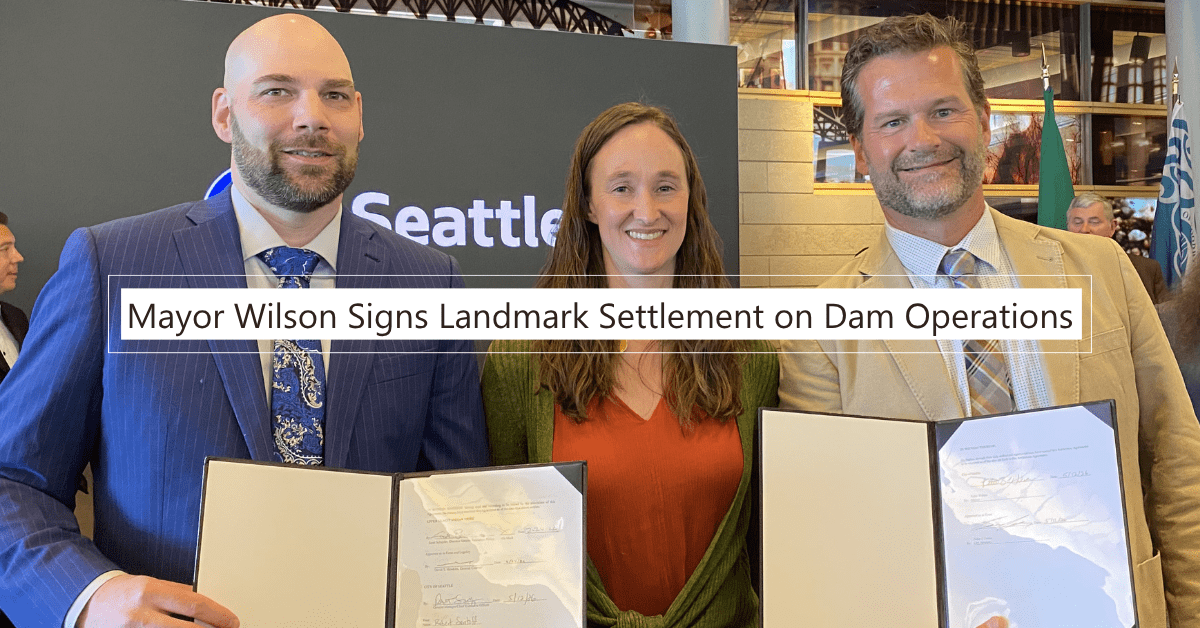
Seattle Mayor Katie B. Wilson welcomed Tribes, state and federal agencies, and others to City Hall yesterday for the signing of a historic agreement that will shape the future of one of the City’s most important sources of renewable energy: the Skagit River Hydroelectric Project.
The Federal Energy Regulatory Commission (FERC) Relicensing Settlement, developed through years of collaborative negotiations, reflects broad support from Tribes, resource agencies, local governments, and community stakeholders.
“This is a proud moment for our entire region,” said Mayor Wilson. “The settlement honors the sovereignty and leadership of tribal governments and invests in the kind of long-term environmental stewardship and public benefit that defines who we are as a community.”
The license application, which Seattle City Light submitted to FERC in 2023, will now be amended to incorporate this settlement.
The settlement includes substantial commitments to:
- A comprehensive fish passage program at the project, intended to increase salmon harvest and recovery.
- Continued prioritization of flood risk management, updating protocols to protect people, farmland, homes, and infrastructure.
- Tribal cultural access and protection of resources.
- Public recreation enhancements in one of the wildest, most biologically diverse places in North America including trails, river access and campsites.
- Education and interpretation centers to continue serving students, local communities, and utility ratepayers with hands-on outdoor education and cultural programming.
- Estuary and river restoration to support native fish species and improve water quality.
- Adaptive management frameworks grounded in ongoing scientific research and data sharing.
A Collaborative Path Forward
The comprehensive settlement is the result of eight years of negotiations with multiple parties. It incorporates the latest available science, integrates tribal ecological knowledge, and reflects public priorities for river restoration and recreational use.
What People Are Saying
“This agreement represents years of dedicated work, partnership, and persistence,” said Rob Santoff, Interim General Manager and CEO, Seattle City Light. “We’re grateful to our partners—especially the Tribes—for helping shape a proposal that restores ecosystems, respects cultural connections, and delivers clean, reliable energy.”
“This agreement represents a major milestone for the Skagit River and for the people who depend on it,” said Chris Townsend, Seattle City Light Director of Natural Resources and Hydro Licensing. “It demonstrates what is possible when governments and tribes work together with a long-term vision for stewardship, community, and future generations.”
“This relicensing process has been a significant undertaking for everyone involved. Throughout the negotiations, there were many different needs, priorities, and considerations that had to be carefully weighed,” said Nino Maltos II, Chairman, Sauk-Suiattle Tribe. “From the very beginning, we strongly advocated for the protection of the salmon not only for the Sauk-Suiattle Tribe, but for everyone who relies on and enjoys the Skagit River and its resources. This is the same river my father fished as a young man, and the same river where I learned to fish alongside many others in our community. It is truly an honor to advocate for something so deeply important to us all. What is now before you is a monumental agreement. It represents the City of Seattle’s commitment to giving back to the river and acknowledging the impacts caused by decades of power generation. More importantly, it reflects a spirit of mutual understanding and cooperation between the tribes and all parties involved. Reaching this point required a tremendous amount of time, effort, compromise, and commitment from everyone at the table. While this agreement should not be viewed as complete mitigation for the impacts caused by the dams, it is an important and meaningful step forward. The Sauk-Suiattle Tribe made considerable sacrifices and major compromises throughout this process in the interest of achieving a relicensing agreement that serves the greater good for the river, the salmon, and future generations.”
“The Swinomish Indian Tribal Community is grateful to Mayor Wilson for signing this historic agreement and demonstrating a shared commitment to protecting the Skagit River and recovering salmon populations for future generations. Swinomish is proud to have worked alongside Seattle City Light, the Upper Skagit Tribe, the Sauk-Suiattle Tribe, and many other partners to reach this milestone. As People of the Salmon, protecting the health of the Skagit River and upholding our Treaty rights will always be central to our work, and this agreement creates a strong path forward for salmon, Orcas, Tribal communities, and all Washingtonians,” said Swinomish Indian Tribal Community Chairman Steve Edwards.
“This is a milestone for the Skagit River and Upper Skagit Tribe in the journey that began 124 years ago with the construction of the first Skagit Dam in 1921,” said Scott Schuyler, Upper Skagit Indian Tribe Policy Director. “By Mayor Wilson’s signing this agreement, we will begin a new 50-year journey of healing and cultural restorative justice. The Upper Skagit people have borne the brunt of the cultural impacts of hydro power in our home but now look to a brighter future for our namesake river.”
“Improving fish habitat and restoring river ecosystems are critical to the health of the Skagit River basin,” said Casey Sixkiller, director of the Washington Department of Ecology. “This agreement delivers important progress on those protections, while also preserving a key source of renewable energy for the region. Ecology is pleased to be part of this generational agreement that balances the needs of fish, the environment, flood protection, and our state’s clean energy future.”
“This relicensing agreement is good news for fish passage, habitat restoration, and people from the Skagit Valley to the City of Seattle,” said Director Kelly Susewind of the Washington Department of Fish and Wildlife (WDFW). “We’re ready to roll up our sleeves and get to work on what comes next: collaborating on how best to implement this agreement, including bringing salmon back to the upper Skagit watershed and restoring habitat for fish and wildlife.”
“For anglers, especially those of us who have built traditions around the Skagit River’s renowned winter steelhead fishery, this mitigation package is a reason to celebrate. It is a monumental investment in the basin’s habitat, native fish and communities. The agreement modernizes hydropower operations, honors tribal treaty rights, supports large-scale restoration of salmon and steelhead runs, and sets the stage for impactful, science-based implementation going forward,” said Jonathan Stumpf, Senior Manager, Wild Steelhead Initiative, Trout Unlimited.
“After years of collaboration, we are encouraged to see this comprehensive settlement agreement move forward,” said Alison Studley, Executive Director, Skagit Fisheries Enhancement Group. “This agreement reflects a powerful commitment to salmon and the people of the Skagit Valley, and we are excited about the long-term investment it makes in the Skagit River and the future of salmon in our watershed.”
Next Steps
The settlement now moves to the next stage of review as part of the FERC licensing process. Upon approval, City Light will begin phased implementation of major infrastructure and ecological investments.
About the Skagit River Hydroelectric Project
The Skagit River Hydroelectric Project is located within the Ross Lake National Recreation Area in North Cascades National Park, is a series of three dams that have a total installed capacity of 840 megawatts and generate about 20 percent of Seattle City Light’s power.
The project is licensed by FERC. The current license, issued in 1995, expired on April 30, 2025. City Light is operating the project under annual licenses while continuing to work with federal and state agencies, Tribes, and other organizations toward a new 50-year license that will:
- Restore the Skagit River watershed ecosystem and support salmon recovery
- Respect Treaty Tribes’ fishing rights
- Address the historic and ongoing impacts of the dams on Tribes’ cultural resources and treaty interests
- Deliver benefits to the communities most impacted by the facilities
- Create jobs through license implementation
- Restore habitat based on local priorities and voluntary land acquisition
Learn more on the Skagit Relicensing webpage.